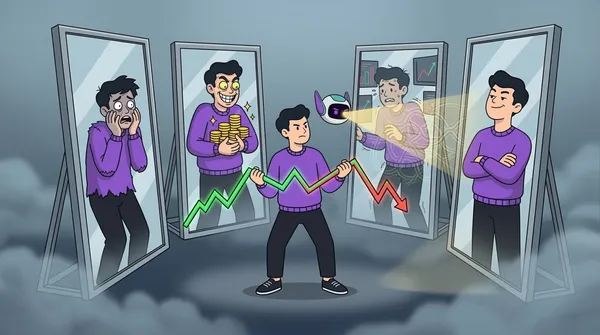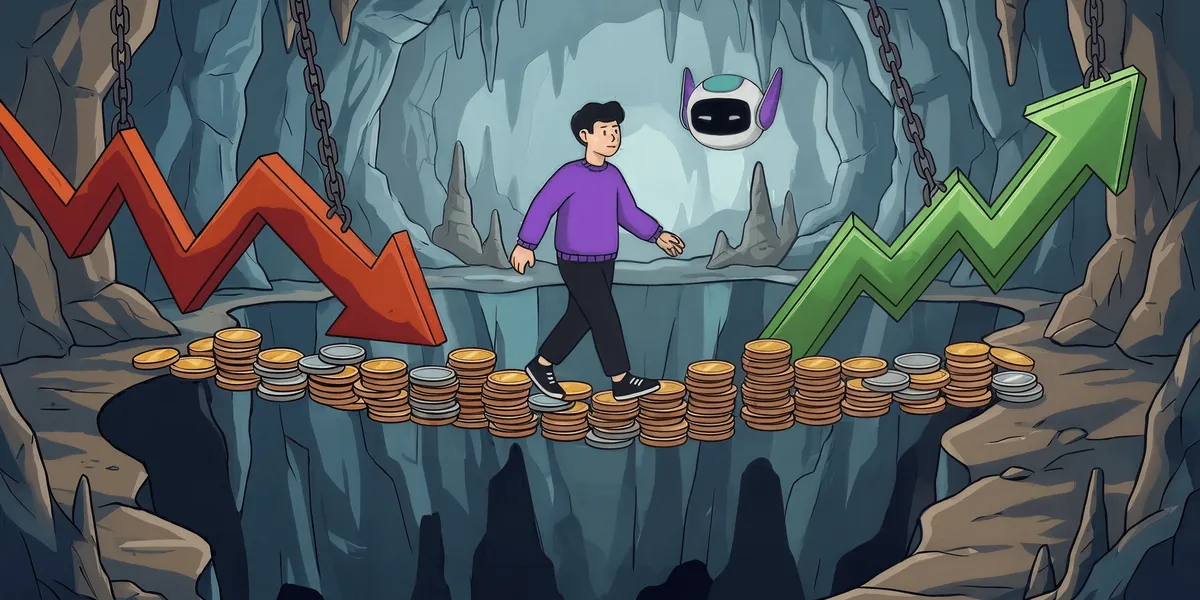
Most traders lose for a reason that has nothing to do with their strategy. Their setups are sound. Their risk-reward ratios make sense on paper. But the moment the market moves against them — or goes dramatically in their favour — the plan evaporates. What replaces it is emotion.
Trading psychology is the operating system underneath every decision you make. When it is miscalibrated, even the best technical system will produce inconsistent, losing results. Understanding the most common trading psychology mistakes is the first step to fixing them — permanently.
Why Trading Psychology Matters More Than Strategy
A 2024 study of retail forex accounts found that traders who maintained a consistent pre-trade routine — including emotional check-ins — had a 34% higher rate of plan adherence compared to those who did not. The strategy was identical across groups. The psychology was not.
This is the paradox at the heart of trading: most traders spend 90% of their development time refining entries and zero time understanding why they abandon those entries the moment real money is at stake. The solution is not a better indicator — it is a better understanding of your own mental patterns.
Below are the most common trading psychology mistakes, why they happen, and how to address each one.
Mistake 1: Not Having a Trading Plan
The most costly psychological mistake is the most obvious one: trading without a written plan. Without pre-defined rules for entry, exit, and position sizing, every decision defaults to your emotional state in that moment. And your emotional state is a terrible trader.
A trading plan removes the burden of in-the-moment decision-making. When you have already decided — calmly and rationally — exactly what conditions justify a trade, you no longer need to evaluate feelings under pressure. The plan does the deciding; you just execute it.
What to include in your trading plan:
- Specific entry criteria (not vague — exact conditions that must all be met)
- Fixed stop-loss rules based on technical levels, not emotional tolerance
- Position sizing formula (e.g. risk 1% of account per trade)
- Maximum daily loss limit — when hit, the session ends
- A list of market conditions where you will not trade at all
Review your plan before every session. If you deviate from it, write down exactly why. This creates accountability and reveals the emotional patterns you are working against.
Mistake 2: Trading on Fear
Fear manifests in two destructive ways in trading. The first is fear of loss: exiting winning trades too early because you are terrified of seeing profits disappear. The second is fear of missing out (FOMO): entering trades without a valid setup because you cannot stand watching an asset move without you.
Both forms of fear override rational analysis. Fear of loss produces a systematic bias toward cutting winners short while letting losers run — the exact opposite of what a positive expectancy system requires. FOMO produces impulsive late entries with poor risk-reward ratios.
How to address fear:
- Accept losses as a cost of doing business, not a personal failure. Every system loses — the question is whether losses are within your risk parameters.
- Create a physical checklist you must complete before every entry. If a trade does not tick every box, you do not take it — no matter how strong the urge.
- After a FOMO entry, log the emotional state that drove it and track the outcome. Most FOMO trades lose. Seeing your own data is more persuasive than any rule.
Mistake 3: Letting Greed Override Your Rules
Greed in trading is not just about wanting more profits. In the most destructive form, it shows up as refusing to take losses — holding a losing position long past the stop because you are convinced it will turn around. This is sometimes called “hope trading.”
Greed also appears in winning trades as an inability to take profit at the predetermined target. You hold for more, the trade reverses, and a profitable position becomes a loss.
The common thread is that greed replaces the plan with wishful thinking. The market owes you nothing. A trade that has moved against you and passed your stop is telling you something — and hope is not a valid counter-argument.
How to address greed:
- Set stop-losses as non-negotiable. If moving a stop further from your entry is even a consideration, your original sizing was wrong.
- Use hard take-profit orders, not discretionary exits on winning trades, until you have strong evidence your discretion improves results.
- Journal the outcome of every trade you held past your original target or stop. The data almost always reveals that discipline would have been more profitable.
Mistake 4: Overconfidence After a Winning Streak
A run of successful trades is one of the most psychologically dangerous situations a trader can be in. Consecutive wins create a sense of invincibility — a feeling that you have “figured out” the market. Position sizes creep up. Risk management rules get bent. Analysis gets skipped.
This is the overconfidence trap. Behavioural economist Daniel Kahneman described it as WYSIATI — “What You See Is All There Is.” Recent wins are vivid; the statistical reality that every trade is independent is abstract. The brain ignores the abstract.
The market is efficient at punishing overconfidence. A few outsized positions taken during a winning streak can wipe out weeks of disciplined gains in a single session.
How to address overconfidence:
- Keep position sizing fixed regardless of recent results. A winning streak does not change the probability of the next trade.
- After a sequence of wins, deliberately slow down. Take fewer trades. Raise your entry criteria.
- In your journal, track confidence levels before each trade. Over time you will likely find that the highest-confidence trades are some of your worst performers.
Mistake 5: Revenge Trading After Losses
After a loss — especially a large or unexpected one — the emotional pressure to “get it back” is intense. Revenge trading is the behaviour this pressure produces: re-entering the market immediately after a loss, often without a valid setup, in a desperate attempt to recover.
The outcome is almost always more losses. You are now trading in an elevated emotional state, with compressed analysis time, and often with inflated position sizes to recoup faster. It is the most reliable way to turn a bad day into a catastrophic one.
The cycle follows a predictable path: loss → frustration → impulsive re-entry → further loss → deeper frustration → escalating risk. Breaking the cycle requires interrupting it at the earliest point, which is the first loss.
How to address revenge trading:
- Set a daily loss limit and treat it as the end of your trading session. No exceptions.
- Build a mandatory break into your process after every losing trade — even a small one. Five minutes away from the screen is enough to interrupt the emotional momentum.
- If you find yourself entering a trade within two minutes of exiting a losing one, that is a red flag. Log it and review it.
For a complete guide to eliminating this pattern, see our in-depth piece on how to stop emotional trading.
Mistake 6: Focusing Only on Profits
Traders who track only their P&L are optimising for the wrong variable. A singular focus on profit creates emotional attachment to individual trades and produces inconsistent decision-making — you exit a trade early when you’re up (to secure the “win”) and hold too long when you’re down (to avoid the “loss”).
Process-oriented traders focus on whether they followed their plan correctly. A trade that followed every rule and lost is a good trade. A trade that broke the rules and won is a dangerous one — it reinforces the wrong behaviour.
How to address profit-focus:
- Score each trade on plan adherence (1–5), separate from P&L. Track both over time.
- Celebrate process wins, not just outcome wins. A session where you followed every rule — even if you lost money — is progress.
- Review your journal weekly looking at process scores, not just total P&L.
Mistake 7: Comparing Yourself to Other Traders
Social media has created an environment where traders are constantly exposed to other people’s winning trades. Nobody posts their drawdowns. The result is a distorted view of how trading actually works — and a persistent, corrosive sense that everyone else is performing better than you.
This comparison produces several psychological problems: it generates FOMO (you must be missing something they know), it triggers overconfidence in bull markets (when everyone looks like a genius), and it creates shame and self-doubt after normal losses.
Every trader’s journey is genuinely different. Risk tolerance, available capital, time horizon, market, and strategy all differ. Comparing your process to someone else’s highlights is not information — it is noise.
How to address comparison:
- Limit social media consumption during trading sessions.
- Benchmark yourself against your own historical performance, not other traders.
- Join communities where traders share losses and lessons honestly, not just wins.
Mistake 8: Not Managing Emotions in Real Time
Knowing about trading psychology mistakes intellectually is very different from catching them as they happen. Most traders can describe, in hindsight, exactly what went wrong. The problem is that in the moment — adrenaline elevated, P&L moving — the analytical mind is offline and the emotional brain is in charge.
Emotional regulation in real time requires practice, not just knowledge. Techniques that help:
- Deep breathing: Slow, controlled breathing (4 seconds in, hold 4, out 4) directly counteracts the fight-or-flight response triggered by market stress.
- Emotional labelling: Naming what you feel (“I am feeling anxious right now”) creates psychological distance from the emotion and reduces its control.
- Pre-session check-ins: Rate your emotional state (1–10) before opening your platform. If you are above 7 in anxiety or frustration, the session should not start.
How Plancana Builds Trading Psychology Habits
Awareness is the foundation — but it needs a system. Plancana’s trading psychology app is built specifically around the patterns described in this article.
Every trade you log in Plancana includes a mood diary: how you felt before entering, and how you felt when you exited. Over time, Plancana’s AI identifies which emotional states correlate with your losing trades. Instead of vague awareness that you “trade badly when stressed,” you get a specific data point: “83% of your losing trades were entered when you logged anxiety or frustration.”
That is actionable. That is the kind of feedback that changes behaviour.
Key Plancana features for psychology:
- Pre-trade and post-trade mood diary — log your emotional state per trade, every session
- AI emotional pattern analysis — automatically surfaces which emotions correlate with your losses
- Automatic broker sync — MT4, MT5, ByBit, TradeLocker auto-sync trades so journaling requires minimal effort
- Goal tracking — stay accountable to your process goals, not just your P&L
Building Better Trading Psychology: A Practical Framework
Apply this sequence to start building psychological resilience now:
- Write your trading plan this week. One page. Entry criteria, exit rules, daily loss limit.
- Add an emotional check-in to your pre-session routine. Rate how you feel before every session.
- Journal every trade. Include emotional state, whether you followed your plan, and lessons learned.
- Review weekly. Look for patterns: which emotions precede your worst trades?
- Set a daily loss limit and enforce it. The first time you stop on schedule instead of revenge trading, you will feel the difference.
The traders who achieve long-term consistency are not the ones with the best systems — they are the ones who have learned to execute their system regardless of how they feel. That is trading psychology at its most practical.
Ready to start? Download Plancana free on iOS or Android and begin building the data record that will make your own psychological patterns impossible to ignore.